
 Food and pharma industry
 Artisanal cannery


Our expertise
In the food and beverage industry, optimizing the sterilization and pasteurization cycle has become a strategic priority.Today, manufacturers must find the best balance to ensure industrial performance while ensuring the food safety of their products and controlling energy consumption.
For more than 38 years, we have been helping manufacturers optimize their sterilization and pasteurization processes. Our approach is based on one key principle: defining and applying the heat treatment necessary to ensure the product’s food safety while preserving its quality.
Before attempting to reduce cycle time, it is essential to ensure the product’s food safety.
Sterilization and pasteurization processes help control the growth of microorganisms that could spoil products or pose a risk to consumers.
Microorganisms monitored in the food industry include, in particular: Clostridium botulinum, Listeria monocytogenes, and Salmonella.
Proper control of heat treatment is an integral part of the food safety procedures recommended by international reference organizations such as the European Food Safety Authority (EFSA), the Food and Drug Administration (FDA), and the FAO/WHO Codex Alimentarius.
Optimizing a cycle, therefore, does not involve reducing safety margins, but rather gaining a better understanding of the product’s behavior in order to avoid excessive heat treatment.
Optimizing a sterilization cycle is a key driver of performance for manufacturers.
An optimized cycle improves the utilization of available facilities.
Saving just a few minutes on each cycle can add up to significant savings over the course of a production year. Specifically:
Optimizing heat treatment thus helps improve the overall efficiency of a production line.
The various phases of a heat treatment cycle—including heating and cooling—require significant amounts of energy and water.
Optimizing the cycle parameters helps reduce:
This approach also addresses the current challenges faced by manufacturers in reducing their environmental impact.
Heat treatment is essential to ensure food safety, but excessive exposure to heat can affect certain product characteristics:
Precise cycle optimization helps minimize the effects of overprocessing and best preserve the characteristics sought by consumers.
Optimizing a heat treatment cycle relies on a methodical approach that combines a case-by-case analysis of the product, precise measurements, and validation of parameters.
At Steritech, we rely on several key steps to help manufacturers improve their processes.
Before making any changes to an existing cycle, it is essential to analyze the characteristics of the product being processed.
Several factors influence heat penetration:
A change in formulation or packaging can significantly alter a product’s thermal behavior and require a new process analysis.
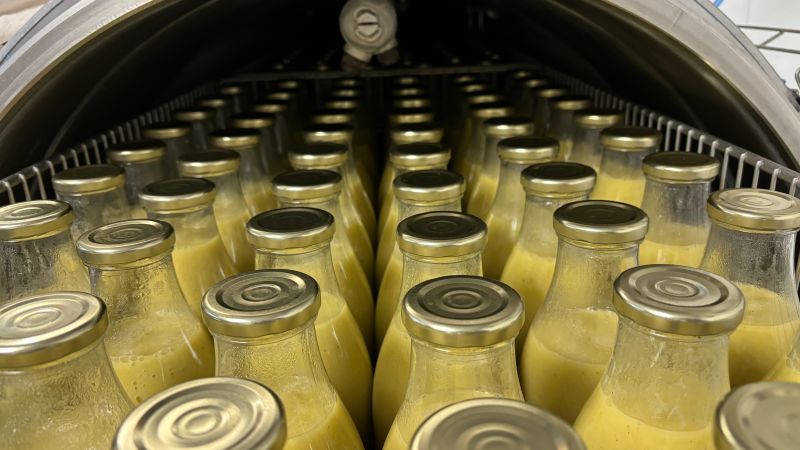
The temperature displayed on the autoclave ‘s control panel corresponds to the temperature inside the chamber, which differs from the core temperature of the product.
However, it is the core temperature of the product that allows us to evaluate the effectiveness of the heat treatment.
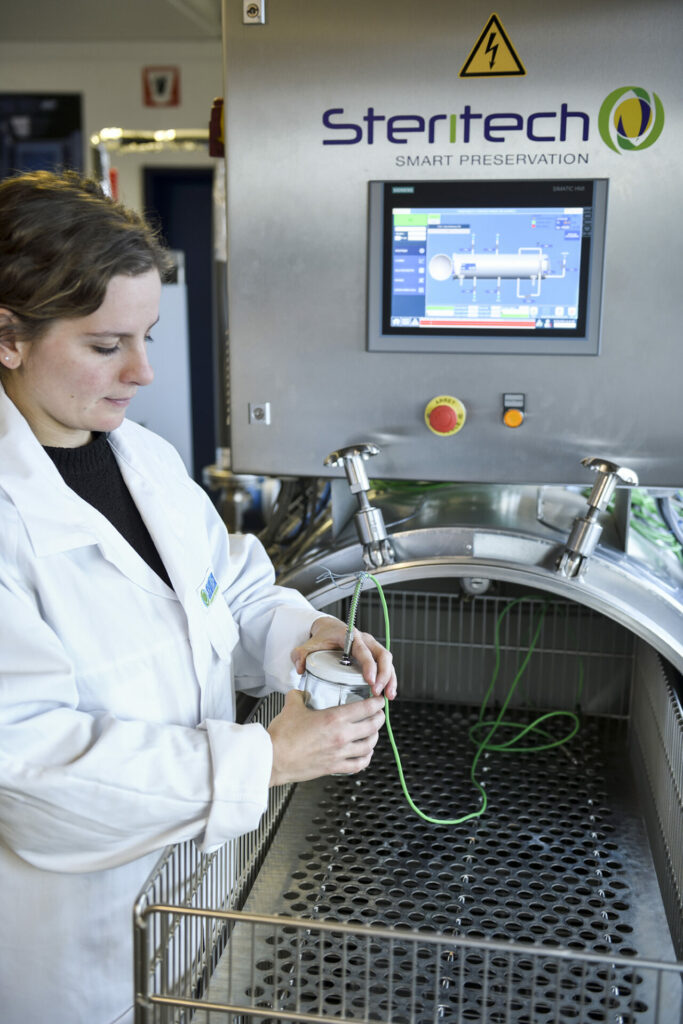
To this end, Steritech ‘s thermocouple probes enable:

These measurements provide a precise understanding of the product’s behavior throughout the cycle. They serve as the necessary foundation for determining whether the treatment applied meets the product’s actual needs and for identifying potential areas for optimization.
To interpret this data, manufacturers rely in particular on the concepts of sterilization value (SV) and pasteurization value (PV). 👉 To learn more, (re)read our article: How is sterilization time calculated in the industry?
In our testing laboratory, we support manufacturers in a variety of situations:
These tests make it possible to replicate industrial conditions, analyze the results obtained, and determine the most appropriate parameters for heat treatment.
Once the data has been analyzed, the final step is to define a schedule suited to the product and the defined industrial objectives.
A properly established scale ensures:
The creation or revision of a scale must therefore always be based on reliable data and rigorous validation.
To learn more, (re)read our article: 👉 Creating and Optimizing Sterilization and Pasteurization Schedules
Our experts will guide you through the entire process, from analyzing the thermal behavior of your products to validating an optimized rating system in the laboratory.